
Essential Tips for Self Drive in Uganda
Planning a road trip through Uganda gives you the freedom to explore the country’s stunning beauty at your own pace, make stops whenever you want, and discover places beyond the usual tourist routes. From the wildlife-rich savannahs of Queen Elizabeth National Park and Murchison Falls National Park to the misty mountains of Bwindi and the beautiful landscapes around Lake Bunyonyi, self drive in Uganda can be a very rewarding way to experience the Pearl of Africa.
However, driving in Uganda is quite different from driving in many other tourist destinations. Long distances, changing road conditions, wildlife areas, rural roads and unpredictable weather require good preparation. Whether you are planning a Uganda wildlife safari, a cross-country self drive road trip or a multi-country East African adventure, these essential tips for self drive in Uganda will help you travel more confidently and safely.
Choose the Right Car for Self Drive Uganda
The most important decisions when planning self drive Uganda is choosing a suitable rental vehicle. Whereas a normal car may be sufficient for city or town drives, a reliable 4×4 is highly recommended for a safari and longer journeys.
A 4×4 car hire Uganda vehicle gives you better ground clearance and improved capability on rough, muddy and uneven roads. This becomes particularly useful when visiting national parks, remote lodges, rural communities and destinations where roads can be challenging especially during the rainy season.
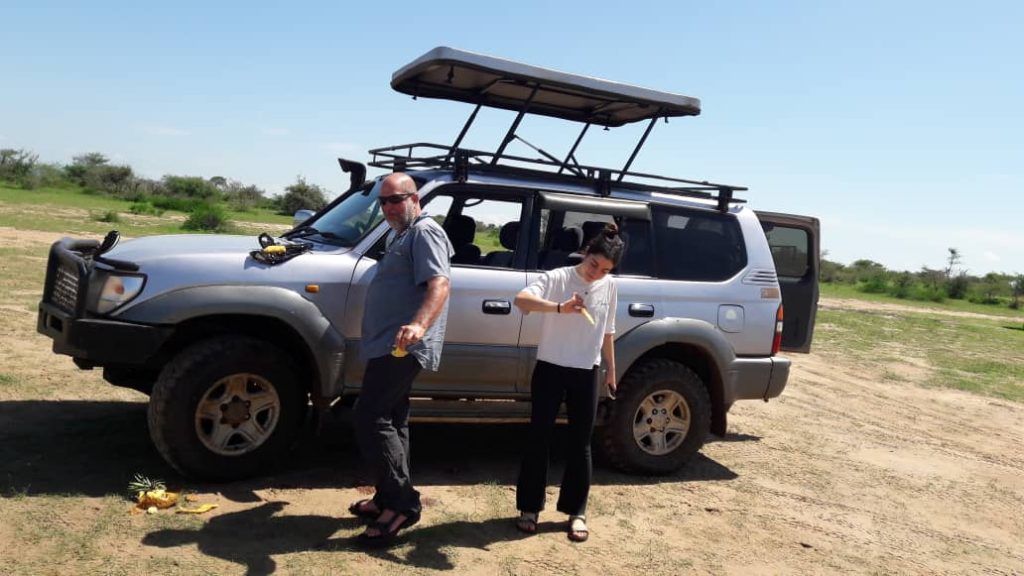
Popular options for Uganda safari car hire include the Toyota Land Cruiser Prado TX, Land Cruiser V8, Land Cruiser Hardtop, Toyota Hilux, Toyota Rav4, and other well-maintained 4×4 vehicles. If you are travelling with camping equipment, consider a 4×4 equipped with a rooftop tent and suitable camping gear.
Understand Uganda’s Driving Conditions
Before starting your self drive in Uganda, understand that road conditions vary considerably.
Major highways connecting Kampala with big cities and tourist destinations are generally easier to navigate, while roads in rural areas and national parks can be rough, dusty, muddy or uneven. Some routes may include potholes, steep sections, narrow bridges and unpaved stretches.
Your driving speed should therefore depend on the road rather than simply following the maximum speed you are accustomed to at home. Take your time, especially when approaching bends, villages, junctions and areas with limited visibility.
Drive on the Left Side of the Road
Uganda drives on the left-hand side of the road. If you come from a country where vehicles drive on the right, give yourself some time to become comfortable with the difference. Only overtake from the right hand side.
Pay particular attention when leaving parking areas, joining main roads, entering roundabouts and making turns at intersections. When beginning your self drive Uganda adventure, it is better to drive conservatively until you become familiar with local traffic patterns.
Plan Your Routes Before You Leave
Do not rely entirely on spontaneous navigation when travelling long distances in Uganda. Plan your route before setting off and understand the approximate driving distance, road conditions, fuel stops and accommodation options.
Some safari destinations are much farther apart than they appear on a map. A journey that looks short geographically can take considerably longer because of road conditions, traffic, stops and park roads.
For a successful self drive safari Uganda experience, plan realistic daily driving distances instead of trying to cover too much ground in one day.
Use Reliable Navigation
A reliable navigation system is essential for self drive in Uganda. Download offline maps before leaving towns because mobile internet coverage can become weak or unavailable in remote areas.
It is also useful to carry a physical map or have your route information saved offline. Do not depend exclusively on your phone, particularly when travelling through national parks and remote parts of the country.
Before starting each day’s journey, check your route and identify major towns, fuel stations, accommodation and alternative roads where possible.
Fuel Up Whenever You Can
Fuel stations are common in major towns, but they become less frequent as you travel into remote areas. One of the most important tips for self drive in Uganda is to avoid allowing your fuel tank to become nearly empty.
Whenever you reach a reliable fuel station, consider refuelling, especially before entering a national park or travelling into a remote region.
If your itinerary includes long stretches between destinations, ask your Uganda car rental company about the expected fuel availability along your route.
Be Careful Around Pedestrians and Motorcycles
Motorcycles, commonly known as boda bodas, are an important part of transportation in Uganda. You will encounter them frequently in towns and along major roads.
Pedestrians and cyclists are also common, particularly around trading centres and villages. Slow down when approaching busy areas and avoid overtaking unless you have a clear view of the road ahead.
Staying alert and leaving sufficient following distance can make your self drive in Uganda experience much safer and more comfortable.
Understand How to Drive in National Parks
Driving in Uganda’s national parks requires additional care and patience. Wildlife has priority, and animals can appear unexpectedly on roads and tracks.
When you encounter elephants, buffaloes, antelopes, giraffes or other wildlife, slow down and maintain a safe distance. Never attempt to approach, chase, block or provoke animals for a photograph.
If you are using a 4×4 self drive Uganda vehicle, remember that having a capable vehicle does not mean you should drive aggressively on park tracks. Mantain a speed limit of 30-40 Kilometers per hour when driving in National Parks. Low speeds will help protect the vehicle, reduce disturbance to wildlife and give you more time to react.
Check the Vehicle Before Starting Your Trip
Before collecting your rental vehicle, inspect it carefully. Check the tyre pressure, spare tyre, lights, brakes, windscreen, mirrors and basic mechanical condition.
For a long 4×4 car rental Uganda journey, also confirm that the vehicle has a car jack, wheel spanner, warning triangle and other essential equipment.
If you are hiring a vehicle with camping equipment, check that the rooftop tent, mattresses, cooking equipment and other camping items are properly supplied and in good working condition before leaving the rental location.
Carry Important Travel Documents
Keep your passport, driving licence, rental agreement, insurance documents and other relevant travel documents safely accessible.
If you are crossing from Uganda into Rwanda, Kenya or another neighbouring country, confirm the required cross-border documentation with your car rental company before travelling.
For self drive Uganda and Rwanda, for example, it is important to confirm in advance that your rental vehicle is permitted to cross the border and that the required documentation has been arranged.
Prepare for Changing Weather
Uganda has a generally pleasant climate, but weather conditions can change quickly, particularly in mountainous and rural regions.
Rain can make unpaved roads slippery and muddy. Some roads that are easy to drive during dry weather can become considerably more challenging after heavy rainfall.
If your itinerary includes remote national parks or camping, monitor the weather and remain flexible. A properly equipped 4×4 car hire Uganda vehicle can make difficult conditions easier to manage, but careful driving is still essential.
Carry Water and Basic Supplies
Long-distance journeys require preparation. Carry sufficient drinking water and some snacks, particularly when travelling between remote destinations.
A small emergency kit is also useful. Depending on your itinerary, this can include a flashlight, phone power bank, basic first-aid supplies, rain gear and other personal essentials.
If you are camping during your self drive safari Uganda, make sure you have enough food, water and camping supplies before entering remote areas.
Respect Local Communities
A self-drive journey allows you to experience Uganda beyond the main tourist attractions. You will pass through villages, trading centres, farming communities and towns.
Drive respectfully through communities, reduce your speed in populated areas and ask permission before photographing people.
One of the advantages of self drive in Uganda is the opportunity to experience the country at your own pace, so take time to appreciate the landscapes, culture and communities along the way.
Do Not Overload Your Vehicle
When preparing for a long road trip, it can be tempting to carry everything you might possibly need. However, excessive luggage can affect passenger comfort and vehicle handling.
Pack efficiently and consider the amount of luggage space available in your rental vehicle. If you are hiring a 4×4 car with a rooftop tent, confirm how much luggage and camping equipment the vehicle can comfortably accommodate.
Keep Emergency Contacts and Your Rental Company Number
Before leaving, save the telephone number of your car rental company and your accommodation providers. If you experience a mechanical problem, accident or other emergency, you should be able to contact someone quickly.
A reputable Uganda car rental company should also provide guidance on what to do in case of a breakdown or mechanical issue during your trip.
Take Your Time
Perhaps the most important advice for self drive Uganda is simple: do not rush.
Uganda is a destination where the journey itself is part of the experience. You may encounter beautiful scenery, wildlife, local markets, viewpoints and interesting communities along the way.
Instead of trying to cover hundreds of kilometres every day, create an itinerary that gives you enough time to enjoy each destination.
Consider a One-Way or Cross-Border Rental
If you are planning a longer East African road trip, you may not need to return your vehicle to the same location.
Some one way car hire Uganda options allow travellers to collect a vehicle in one city and arrange drop-off in another location, subject to rental terms and cross-border requirements.
For travellers planning self drive Uganda and Rwanda, a cross-border rental can make it possible to explore multiple destinations with one vehicle rather than returning to the original rental location. Always confirm border permissions, insurance and vehicle documentation while booking.
Choose a Reliable 4×4 Car Rental Company
The quality and condition of your rental vehicle can significantly affect your road trip. Choose a company that provides well-maintained vehicles and clearly explains the rental terms before you travel.
At 4WD Car Hire Uganda, we provide 4×4 vehicles suitable for self-drive adventures, safari travel, camping and longer road trips across Uganda. Depending on your itinerary, you can choose from vehicles such as Land Cruiser Prado TX, Land Cruiser V8, Land Cruiser Hardtop, Toyota Hilux and other safari-ready options.
Our goal is to make self drive in Uganda straightforward by providing reliable vehicles and practical information to help travellers prepare for their journeys.
Start Your Self Drive Uganda Adventure
With the right vehicle, realistic route planning and careful driving, self drive in Uganda can be one of the most memorable ways to explore the Pearl of Africa. From Kampala and Entebbe to Murchison Falls, Queen Elizabeth, Kibale, Bwindi, Kidepo and Lake Mburo, having your own rental vehicle gives you greater freedom to explore.
Choose a suitable 4×4 car hire Uganda vehicle, plan your route carefully, carry the essentials and allow enough time to enjoy the journey. Whether you are planning a short Uganda road trip, a camping safari or a longer East African adventure, proper preparation will help you make the most of your self drive Uganda experience.
Ready to explore Uganda by road? Contact 4WD Car Hire Uganda to choose a reliable 4×4 vehicle for your self-drive safari and start planning your journey.